Metal Fabrication Boise ID has played an important role in human development for thousands of years, but the way metal is shaped, joined, finished, and transformed has changed dramatically over time. What once depended almost entirely on manual strength, basic tools, heat, and the experience of individual craftspeople has evolved into a highly sophisticated field that combines skilled workmanship with advanced machinery, computer-controlled equipment, automation, and precise engineering. Today, metal fabrication can produce everything from structural components and architectural features to industrial equipment and highly customized metalwork, often with a level of accuracy that would have been difficult to imagine in earlier generations.
The evolution of metal fabrication is not simply a story about replacing hand tools with machines. It is a story about improving control. As technology advanced, fabricators gained better ways to measure materials, manage heat, create precise cuts, form complex shapes, and join components securely. At the same time, improvements in metallurgy introduced stronger, lighter, and more specialized materials that expanded what could be fabricated. Modern metal fabrication therefore represents the combination of traditional craftsmanship, material science, engineering, digital design, and manufacturing technology.
Understanding how metal fabrication has evolved over the years provides useful insight into why modern fabricated metal products can be so precise, durable, and versatile. It also shows how the industry continues to adapt as manufacturers and fabricators seek greater efficiency, improved safety, reduced material waste, and more complex design possibilities.
The Early Foundations Of Metal Fabrication
The earliest forms of metal fabrication were closely connected to the discovery and use of workable metals. Early craftspeople learned that certain metals could be heated, hammered, bent, and shaped into useful tools and objects. Without modern machinery, much of the work depended on physical effort and careful observation. Heating the material to the appropriate temperature and striking it with controlled force allowed craftspeople to gradually develop desired shapes.
This early approach required substantial knowledge and skill. A craftsperson needed to understand how metal responded to heat, pressure, and repeated shaping. Mistakes could weaken the material or make it impossible to achieve the desired form. Measurements were often based on practical experience rather than the highly precise digital specifications used today.
Forging became one of the foundational techniques in metalworking. Heated metal could be compressed or shaped using hammers and other tools, allowing useful components to be produced. Over generations, metalworkers refined these techniques, developing specialized tools and methods for producing stronger and more consistent results.
Although modern fabrication looks very different, the principles behind these early processes remain relevant. Heat, pressure, cutting, forming, and joining are still fundamental elements of metal fabrication. The major difference is the level of precision, repeatability, and technological control available today.
The Rise Of Specialized Metalworking
As societies became more industrialized, demand for metal products increased. Construction, transportation, manufacturing, agriculture, and other industries required larger quantities of metal components. This demand encouraged the development of more specialized equipment and more efficient fabrication methods.
Machines gradually took over some of the physically demanding tasks that had previously required extensive manual labor. Cutting equipment became more capable, forming machinery improved, and standardized measurements became increasingly important. These developments allowed fabricators to work with larger pieces of material and produce components more consistently.
The growth of industrial manufacturing also changed expectations around production. Instead of creating every component individually according to a craftsperson’s judgment, manufacturers increasingly needed repeatable processes capable of producing multiple pieces with similar dimensions and characteristics. This shift helped establish many of the production principles that continue to influence modern metal fabrication.
Standardization became particularly valuable because fabricated components often needed to fit together with other manufactured parts. Improved measurement systems and manufacturing tolerances made it possible to produce more complex assemblies while reducing inconsistencies.
The Development Of Welding Technology
Welding represents one of the most significant developments in the history of metal fabrication. Before modern welding methods became widely available, metal components could be joined using techniques such as riveting, bolting, forging, and other mechanical methods. These methods remain useful, but welding introduced new possibilities for creating permanent joints between metal components.
As welding technology developed, fabricators gained better control over how metals could be joined. Different welding processes became suited to different materials, thicknesses, applications, and working environments. Welding made it possible to create strong connections while reducing the need for certain mechanical fasteners.
The development of welding also expanded the creative possibilities of fabrication. Complex frames, structures, equipment, architectural components, and custom assemblies could be created by cutting individual pieces and joining them into larger forms. Skilled welders became an essential part of fabrication operations because the quality of a finished product depends heavily on joint preparation, heat control, technique, and inspection.
Modern welding continues to evolve through improvements in equipment, consumables, automation, monitoring, and quality control. However, the fundamental objective remains the same: producing reliable and appropriately designed connections between metal components.
The Impact Of Cutting Technology
Metal cutting has also undergone major changes. Traditional cutting depended on saws, shears, chisels, and other mechanical tools. While these methods remain useful, technological development introduced cutting systems capable of producing highly accurate shapes with considerably greater speed.
Modern cutting technologies can be programmed to follow detailed digital patterns. This has made it easier to produce intricate shapes, repeated components, openings, curves, and custom profiles. Computer-controlled cutting can also improve material utilization by allowing designers to plan how multiple components will be positioned on a sheet before cutting begins.
The advantages extend beyond speed. Precision cutting reduces the amount of manual correction required later in the fabrication process. Accurate cuts can also improve assembly because components are more likely to fit together according to the intended design.
Laser cutting, plasma cutting, waterjet cutting, and advanced mechanical cutting systems have each expanded the range of materials and thicknesses that can be processed. The appropriate method depends on the material, desired tolerance, thickness, edge requirements, production volume, and overall project specifications.
From Hand Drafting To Digital Design
One of the most transformative changes in metal fabrication has been the transition from manual drafting to computer-aided design. Earlier fabrication projects relied heavily on physical drawings, measurements, templates, and calculations. These methods could produce excellent results, but they were more time-consuming to revise and more dependent on manual interpretation.
Digital design has changed that process significantly. Computer-aided design software allows engineers, designers, and fabricators to create detailed models before physical fabrication begins. Dimensions can be checked, components can be adjusted, and potential conflicts can be identified during the design stage.
Digital files can also connect directly with modern manufacturing equipment. A design created on a computer can provide instructions for automated cutting, machining, forming, or other processes. This connection between design and production has helped reduce errors caused by manual transcription and improved consistency across complex projects.
Digital modeling is particularly valuable for custom metal fabrication. Fabricators can work from detailed specifications rather than relying solely on physical templates. This makes it easier to reproduce unusual shapes and integrate fabricated components into larger construction or manufacturing systems.
The Role Of CNC Machinery
Computer numerical control, commonly known as CNC, has taken metal fabrication to another level of precision and repeatability. CNC equipment can execute programmed movements with a high degree of consistency, making it possible to produce multiple components according to the same digital specifications.
The introduction of CNC technology has reduced dependence on manually controlling every movement of a machine. Operators remain important because equipment must be configured, monitored, maintained, and inspected, but computer-controlled systems can handle highly repetitive operations with impressive consistency.
CNC technology is used in many forms of fabrication and machining, including cutting, drilling, milling, turning, routing, and other processes. Its flexibility makes it valuable for both production environments and customized projects.
Two major advantages stand out:
- Repeatability allows multiple components to be manufactured according to consistent specifications.
- Precision makes it possible to produce complex parts with tighter tolerances and fewer manual corrections.
These capabilities have changed the relationship between design and fabrication. A complex digital design can increasingly move from concept to physical component without requiring extensive manual reinterpretation at every stage.
Automation And Modern Metal Fabrication
Automation has continued to expand the capabilities of metal fabrication. Automated systems can assist with cutting, welding, material handling, forming, inspection, and other repetitive operations. The goal is not simply to eliminate manual work but to make production more consistent, efficient, and predictable.
Robotic welding systems, for example, can perform repetitive welds under controlled conditions. Automated cutting equipment can process programmed patterns repeatedly, while material-handling systems can move components through different stages of production.
Automation can be particularly useful when a project requires large quantities of similar components. It can help maintain consistency while reducing fatigue associated with repetitive tasks. At the same time, skilled professionals remain essential for design interpretation, equipment setup, quality assurance, problem-solving, and fabrication processes that require judgment or customization.
Modern fabrication is therefore not simply automated manufacturing. It is a combination of technology and human expertise, with each supporting the other.
Better Materials Have Expanded Fabrication Possibilities
The evolution of metal fabrication has also been driven by improvements in the materials themselves. Fabricators today can work with a broad range of metals and alloys designed for different performance requirements. Strength, weight, corrosion resistance, heat resistance, appearance, machinability, and cost can all influence material selection.
Steel remains widely used because of its strength and versatility, while stainless materials can offer enhanced resistance to corrosion. Aluminum provides a useful combination of relatively low weight and practical strength for many applications. Other specialized alloys can be selected when projects require particular mechanical or environmental characteristics.
Material development has allowed designers to create structures and components that were previously difficult to achieve. Lighter materials can reduce overall weight, while high-strength materials can allow components to withstand demanding loads. The fabricator’s challenge is to understand how each material behaves during cutting, forming, welding, finishing, and installation.
Precision And Quality Control
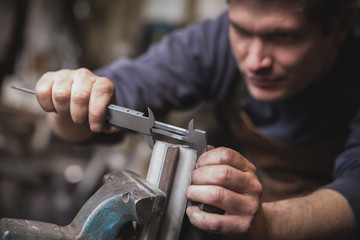
Modern metal fabrication places significant emphasis on quality control. As fabricated components become more complex and tolerances become tighter, inspection is essential for ensuring that finished products meet specifications.
Quality control can occur throughout the fabrication process rather than only at the end. Measurements can be taken after cutting, forming, machining, and assembly. Welds may be inspected for defects, while finished surfaces can be checked for consistency and damage.
Digital measurement equipment has further improved this process. Modern inspection systems can compare physical components against digital models or specified dimensions, helping fabricators identify deviations that may not be obvious through visual inspection alone.
This emphasis on quality has made metal fabrication increasingly dependable for applications where accuracy and structural integrity are critical. It also reduces the likelihood that errors will remain hidden until installation.
Sustainability And Efficient Material Use
Another important stage in the evolution of metal fabrication is the growing focus on sustainability. Fabricators increasingly consider how materials are purchased, processed, reused, recycled, and disposed of. Efficient cutting layouts can reduce scrap, while modern equipment can improve energy efficiency and production planning.
Metal itself can often be recycled, making responsible material management an important part of sustainable fabrication. Designing components for durability can also reduce the need for frequent replacement, helping extend the useful life of fabricated products.
Digital planning contributes to sustainability as well. When a component can be modeled and adjusted before fabrication begins, fewer physical prototypes may be necessary. Better planning can reduce wasted material and minimize errors that would otherwise require components to be remade.
Sustainability in metal fabrication is therefore connected not only to recycling but also to precision, durability, efficient production, and thoughtful design.
The Future Of Metal Fabrication
Metal fabrication continues to evolve as digital technology, automation, materials science, and manufacturing methods develop. Artificial intelligence, advanced robotics, real-time monitoring, digital twins, automated inspection, and increasingly sophisticated manufacturing software may further improve how fabrication projects are planned and executed.
At the same time, skilled professionals will continue to have an important role. Technology can perform programmed tasks with remarkable consistency, but fabrication still requires judgment. Someone must determine whether a design is practical, select appropriate materials and processes, interpret project requirements, troubleshoot unexpected problems, and verify that the finished product meets the intended standards.
The future of metal fabrication will likely involve greater integration rather than a complete replacement of traditional skills. Fabricators will increasingly work alongside digital tools and automated equipment, using technology to improve accuracy while applying practical knowledge to decisions that machines cannot make independently.
The history of metal fabrication demonstrates how a traditional craft has developed into a sophisticated modern industry without losing its fundamental principles. Early metalworkers relied on heat, force, tools, and experience to shape materials. Modern fabricators still depend on those fundamental concepts, but they now have access to computer-aided design, CNC machinery, advanced cutting systems, automated welding, sophisticated materials, digital inspection, and highly controlled manufacturing environments.
This evolution has made metal fabrication more precise, efficient, versatile, and capable of producing increasingly complex designs. It has also created new opportunities for custom metalwork, structural fabrication, architectural applications, industrial components, and specialized manufacturing.
Perhaps the most significant lesson is that technology has not eliminated craftsmanship. Instead, it has changed what craftsmanship can accomplish. Modern fabricators can combine practical knowledge with advanced equipment to transform raw metal into components that are strong, accurate, functional, and visually refined. As new technologies continue to emerge, metal fabrication will likely remain an evolving field—one where the enduring principles of strength and precision meet the possibilities of modern manufacturing.
